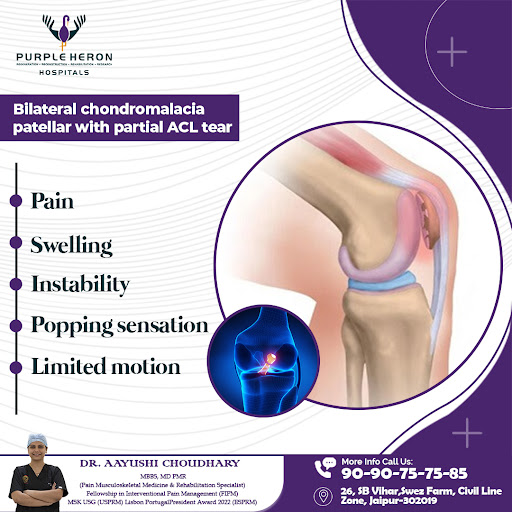
Bilateral chondromalacia patella with a partial ACL tear can lead to persistent knee pain, swelling, and instability, significantly affecting mobility and daily activities. Chondromalacia patella, characterized by the softening and deterioration of the cartilage under the kneecap, causes discomfort and grinding sensations, especially during movement. The partial ACL tear further weakens knee stability, leading to a feeling of giving way or buckling. Patients often experience a popping sensation, particularly with sudden movements or weight-bearing activities. Swelling and inflammation contribute to stiffness, restricting the range of motion and making it difficult to bend or straighten the knee fully. Proper diagnosis and timely treatment, including physical therapy, pain management, and in some cases, surgical intervention, are crucial for restoring function and preventing further damage.
 Update
💜 Arthritis & Joint Preservation – Move Freely, Live Better
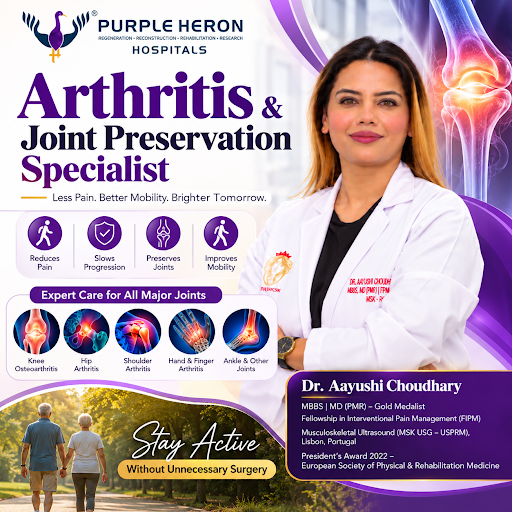
💜 Arthritis & Joint Preservation – Move Freely, Live Better! 🦴✨ 🌟 Joint Pain Shouldn't Stop You From Enjoying Life! Struggling with knee pain, stiffness, swelling or difficulty walking? Arthritis can affect your mobility, comfort and everyday activities. But timely diagnosis and personalized treatment can help you stay active! 👩⚕️ Dr. Aayushi Choudhary MBBS | MD (PMR) – Gold Medalist | FIPM MSK USG – USPRM, Lisbon | President’s Award 2022 – ESPRM At Purple Heron Hospitals, Jaipur, Dr. Aayushi Choudhary provides comprehensive arthritis management and joint-preservation care, focusing on pain relief, improved mobility and long-term joint health. ✨ Our Specialized Care Includes: ✅ Knee Osteoarthritis Management ✅ Hip & Shoulder Arthritis Care ✅ Hand, Finger & Ankle Joint Pain ✅ Image-Guided Pain Interventions ✅ Personalized Rehabilitation Programs ✅ Joint Protection & Mobility Improvement 🔬 Advanced Care. Personalized Recovery. Our approach combines detailed joint assessment, targeted pain management, rehabilitation and lifestyle guidance to support natural joint function and help avoid unnecessary surgery whenever clinically appropriate. 💜 Less Pain. Better Mobility. Brighter Tomorrow! 📍 Purple Heron Hospitals, Jaipur 🌐 www.draayushichoudhary.com #ArthritisTreatment #JointPreservation #DrAayushiChoudhary #PurpleHeronHospitals #ArthritisSpecialistJaipur #KneeOsteoarthritis #JointPain
Read More →